Wilbur
the pig is scared of the end of the season, because he knows that come that
time, he will end up on the dinner table. He hatches a plan with Charlotte, a
spider that lives in his pen, to ensure that this will never happen.
Charlotte's
Web is a children's novel
by American author E. B. White
and illustrated by Garth Williams; it was published in October
15, 1952, by Harper
& Brothers. The novel tells the story of a pig named Wilburand
his friendship with a barn spider named Charlotte. When Wilbur is
in danger of being slaughtered by the farmer, Charlotte writes messages
praising Wilbur (such as "Some Pig") in
her web in order to persuade the farmer to let him live.
Charlotte's
Web
Plot summary
After her
father spares the life of a piglet from slaughtering it as runt of
the litter, a little girl named Fern Arable nurtures the piglet lovingly, naming him Wilbur. On greater
maturity, Wilbur is sold to
Fern's uncle,
Homer Zuckerman, in whose barnyard he is left yearning for
companionship but is snubbed by other barn animals, until befriended by a barn spider named Charlotte,
living on a web overlooking Wilbur's enclosure. Upon Wilbur's discovery that
he is intended for slaughter, she promises to hatch a plan guaranteed to
spare his life. Accordingly, she secretly weaves praise of him into her web,
attracting publicity among Zuckerman's neighbors who attribute the praise to divine
intervention. As time passes, more inscriptions appear on
Charlotte's webs, increasing his renown. Therefore, Wilbur is entered in the
county fair, accompanied by Charlotte and the rat Templeton, whom she employs in gathering
inspiration for her messages. There, Charlotte spins an egg sac containing
her unborn offspring, and Wilbur, despite winning no prizes, is later celebrated
by the fair's staff and visitors (thus made too prestigious alive to justify
killing him). Exhausted apparently by laying eggs, Charlotte remains at the
fair and dies shortly after Wilbur's departure. Having returned to
Zuckerman's farm, Wilbur guards Charlotte's egg sac and is saddened further
when the new spiders depart shortly after hatching. The three smallest
remain, however. Pleased at finding new friends, Wilbur names the spiderlings
Joy, Nellie, and Aranea, and the book concludes by mentioning that more
generations of spiders kept him company in subsequent years.
Characters
Wilbur is a pig,
therunt
of his litter.
He is often strongly emotional.
Fern Arable, John's daughter, who adopts
Wilbur in his infancy, and later visits him. She is the only human in the
story capable of understanding nonhuman conversation.
Templeton is a rat
who helps Charlotte and Wilbur only when offered food. He serves as a
somewhat caustic, self-serving comic
relief to the plot.
Avery Arable is the elder brother of
Fern.
Homer Zuckerman is Fern’s uncle who keeps
Wilbur in his barn.
Other animals in Zuckerman’s barn, with
whom Wilbur converses, are a disdainful lamb, a talkative goose, and an
intelligent "old sheep".
Henry Fussy is a boy of Fern’s age, of
whom Fern becomes fond of.
Dr. Dorian is the family
physician/psychologist consulted by Fern's mother and something of a wise old man
character.
Uncle is a large pig whom
Charlotte disdains for coarse manners and Wilbur’s rival at the fair.
Collects three classic stories about animals trying to
find friendship, love, and their place in the world.
Charlotte's
Web
Charlotte's Web—thebest-selling
children's paperbackof
all time—was described by its author as "a story of friendship and salvation on a
farm." If you've already read the book, you know about the
friendship that grows between Wilbur, a runty pig, and Charlotte, a heroic
spider. But you may not know that the book's author,E. B. White, was himself a friend to animals.
Charlotte's
Web
Saving
a Pig's Life
Wilbur
was rescued three times
1.Fern
2. Words 3. Charlotte
The end
of the story
It is not often that someone comes
along who is a true friend and a good writer.→Not only the meaning of the book, but also the writer is praising
himself.
Presidential
Medal of Freedom
The Presidential Medal of Freedom is an award bestowed by the President of the
United States and is—along with the comparable Congressional Gold
Medal—the highest civilian award of the United States. It recognizes
those people who have made "an
especially meritorious contribution to the security or national interests of
the United States, world peace, cultural or other significant public or private
endeavors". The award is not limited to U.S. citizens and, while it is acivilian award, it can also be
awarded to military personnel and
worn on the uniform.
It was established in 1963 by President John F. Kennedy, superseding theMedal of Freedom
that was established by President Harry S. Truman in 1945 to honor civilian service
during World War
II.
Mockingbird
Mockingbirds are a group of New World passerine birds from
the Mimidae family.
They are best known for the habit of some species mimicking the songs of other birds
and the sounds of insects
and amphibians,
often loudly and in rapid succession.
Mockingjay (飢餓遊戲)
Mockingjay is a
2010 science fiction novel by American author Suzanne Collins. It is the last installment of The Hunger Games, following 2008's The Hunger Games and 2009's Catching Fire. The book continues the story of Katniss Everdeen,
who agrees to unify the districts of Panem in a rebellion against the
tyrannical Capitol. The hardcover and audiobook editions of Mockingjay
were published by Scholastic on August 24, 2010, six days after the ebook edition went on sale. The book sold 450,000
copies in the first week of release, exceeding the publisher's expectations.
It received a generally positive reaction from critics.The novel was adapted
into two films, with The Hunger Games: Mockingjay –
Part 1released in November 2014 and
The Hunger
Games: Mockingjay – Part 2released
a year later.
Idiomatic expression
Idiomatic expressions are a type of informal Englishthat
have a meaning different from the meaning of the words in the expression. e.g. Hold your tongue: This idiom does not actually mean that you should stick
your fingers in your mouth and grab a hold of your tongue.It means that you shouldn't talk.
Apple
of Discord
An apple of discord is a reference to the Golden Apple of Discord
which, according to Greek mythology,
the goddess Eris
tossed in the midst of the feast of the gods at the wedding of Peleus and Thetis
as a prize of beauty, thus sparking a vanity-fueled dispute among Hera, Athena, and Aphrodite that eventually led
to the Trojan War.
Thus, "apple of discord"is used to signify the core, kernel, or
crux of an argument, or a small matter that could lead to a bigger dispute.
"To the Fairest"
In some later sources, Eris inscribed on the apple "for the fair"or "to
the fairest" before tossing it. The most popular version of the
inscription is ΤΗΙ ΚΑΛΛΙΣΤΗΙ.[4]Καλλίστῃ is the dative singular
of the feminine
superlative of καλός, beautiful.
In Latin sources, the word is formosissima.
Fair
1.If
a situation is fair, everyone is treatedequally and
in a reasonable way
2.At
the fair
Fantasy (supernature / imaginary words )
Fantasy is a fiction genreset in
an imaginary universe, often but not always without any locations,
events, or people from the real world. Most fantasy uses magic or other supernatural elements as a main plotelement,theme, or setting.Magic and magical creatures are common in many of these imaginary worlds.
Fantasy is generally distinguished
from the genres ofscience fictionand horror by the expectation
that it steers clear of scientific and macabre themes, respectively, though
there is a great deal of overlap between the three, all of which are subgenres
of speculative fiction.
In popular culture, the fantasy genre is predominantly of
themedievalistform. In its broadest sense, however, fantasy comprises works by many
writers, artists, filmmakers, and musicians from ancient myths and legends to many recent and popular
works.
Winnie-the-Pooh And The Royal Birthday
As Her Majesty The Queen celebrates her official 90th
birthday, a very special bear is also celebrating 90 years.
This October we’re celebrating Winnie-the-Pooh’s 90th anniversary, which
marks 90 years since his first arrival in the Hundred Acre Wood. With Her
Majesty The Queen and Winnie-the-Pooh both celebrating 90 years, it only seems
fitting that these two much-loved British icons should finally meet.
Step into the
unforgettable journey of Pooh and his friends as they travel from the Hundred
Acre Wood to London, to deliver their thoughtful 90th birthday presents to The
Queen.
From riding on an open-top red bus,
to taking in the sights including Trafalgar Square and Buckingham Palace.
Vocabulary
Astro- / Aster: study of stars; relating to the
planets and stars or space
Astrology:
The
study of the movement of
the starsand planetsand how some people think they
influence people’s characters and lives
Astronaut:
Someone
who travels and works in
space
Astronomy:
The scientific study of the stars, planets, and other objects in
the universe
Asterisk
The
symbol *. In a piece of writing, an asterisk
is used after a word or phrase to show that more information is given in a
footnote
Winnie-the-Pooh, also called Pooh Bear,
is a fictional anthropomorphicteddy bear created
by English authorA. A. Milne.
Winnie-the-Pooh
History
A. A. Milne named the character Winnie-the-Pooh for a teddy bear owned by his son,Christopher Robin Milne, who was
the basis for the character Christopher Robin. The rest of Christopher Robin
Milne's toys, Piglet, Eeyore,
Kanga, Roo and Tigger, were incorporated into Milne's stories. Two
more characters, Owl and
Rabbit, were created by Milne's imagination,
while Gopher
was added to the Disney
version. Christopher Robin's toy bear is on display at the Main Branch
of the New York Public Library in New York City.
Pooh
(噗ㄘ一笑): Used for saying that
what someone has said should not be considered seriously
lPooh and the
Psychologists
Robin had a fear of
bear.
Piglet lacks of self -
confidence and likes to dependent on others.
Tigger is excess energy and
no goal.
Rabbit is always mercy
others.
Kanga and small kangaroo
has a parent-child problem.
Dr. Owl cannot
communicate well with others.
Use great therapy the
animals make a great progress.
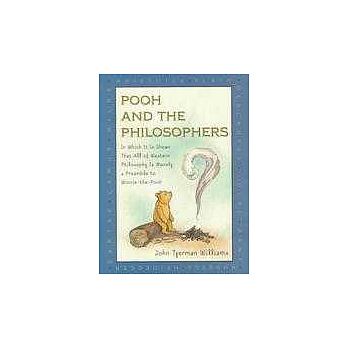
lPooh and the
Philosophers
Discusses the idea that
the ideas of all the great philosophers of the West, such as Aristotle, Plato,
and Camus, can be found in the tales of Pooh, demonstrating that their philosophies can be seen throughout
the varied collection of Pooh tales.
Onomatopoeia
(擬聲詞) (synonym: Imitation
and resemble)
In the
English language, the term onomatopoeia means "the imitation of a sound," the
compound word onomatopoeia in the Greek language means "making or creating
names.""Echo
or sound","mimetic or imitation".
Onomatopoeia
Uses of onomatopoeia
Some other very common
English-language examples include hiccup, zoom, bang, beep, moo,
and splash.Machines and their sounds are also often
described with onomatopoeia, as inhonk or beep-beepfor the
horn of an automobile, and vroom or brum for the engine. Human
sometimes provide instances of onomatopoeia, as when mwah is used to
represent a kiss.
For animal sounds, words like quack (duck), moo (cow), barkorwoof (dog), roar
(lion),
meow/miaow
or purr
(cat), cluck
(chicken)
and baa (sheep)
are typically used in English.
Fable is a literary genre: a succinct fictional story, in prose or verse, that features animals, legendary creatures, plants, inanimate objects, or forces of nature that are anthropomorphized (given human qualities, such as the ability to speak human language) and that illustrates or leads to a particular moral lesson (a "moral"), which may at the end be added explicitly as a pithy maxim.
A fable differs from a parable in that the latter excludes animals, plants, inanimate objects, and forces of nature as actors that assume speech or other powers of humankind.
Children's
literature or juvenile literature includes stories,
books, magazines, and poems that are enjoyed by children. Modern children's literature
is classified in two different ways: genre or age of the reader.
Children's
literature can be traced to stories and songs. The development of early
children's literature is difficult to trace. Even after printing became
widespread, many classic "children's" tales wereoriginally created
for adults and later adapted for a younger audience. Since the 15th
century, a large quantity of literature, often with a moral or religious message, has been
aimed specifically at children. The late
nineteenth and early
twentieth centuries became known as the "Golden Age of Children's
Literature"as this period
included the publication of many books acknowledged today as classics.
Children's literature
Introduction
There
is no widely definition of children's literature. It can be broadly defined as
anything that children read or more
specifically defined as fiction, non-fiction, poetry, or drama for children
and young people. Nancy Anderson, defines
children's literature as "all books written for children,
excluding works such as comic books, joke books, cartoon books, and
non-fiction works that are not intended to be read from front to back, such
as dictionaries, encyclopedias, and other reference materials".
Some
works defy easy categorization.J.K. Rowling's Harry Potter series
was written and marketed for young adults, but it is also popular among adults. The series' extreme popularity led The New
York Times to create a separate
best-seller list for children's books.
Despite
the widespread association of children's literature with picture books,
spoken narratives existed before printing, and the root of many children's
tales go back to ancient storytellers.
History
Early children's literature consisted
of spoken stories, songs, and poems that
were used to educate,
instruct, and entertain children.Scholars have
qualified this viewpoint by noting that there was a literature designed to convey the values,
attitudes, and information necessary for children within their cultures.
18th century: the development of
the concept of childhood,
a separate genre of children's literature began to emerge
19th century: Danish author and poet
Hans Christian Andersentraveled through Europe and gathered many
well-known fairy tales. He was followed by the
Brothers Grimm, who preserved the traditional tales told in
Germany. The Grimms's contribution to children's literature
goes beyond their collection of stories.
Golden age:The
shift to a modern genre of children's literature occurred in the mid-19th century.Child-oriented
books more attuned to the child's imagination.The
availability of children's literature greatly increased as well, as paper and printing became widely available and
affordable, the population grew and literacy rates improved.
E.g. Lewis Carroll's fantasy, Alice's Adventures in Wonderland, regarded as the
first "English masterpiece written for children."
Carlo Collodi, The Adventures of
Pinocchio
Robert Louis Stevenson , Treasure
Island
Picture book
A
picture book combines visual and verbal narratives in a book format, most often
aimed at young
children.Two of the earliest books with something
like the format picture books still retain now were HeinrichHoffmann's Struwwelpeter from 1845 and Beatrix Potter's The Tale of Peter Rabbitfrom 1902.
Picture book
Target audiences
Picture
books are most often aimed at young children, and while some may have very basic language
especially designed to help
children develop theirreading skills, most are written with vocabulary a child
can understand but not necessarily
read. For this reason, picture books tend to have two functions in
the lives of children: they
are first read to young children by adults, and then children read them themselves
once they begin learning to read.
Fairy
tale
A
type of short story that typically features folkloric fantasy characters, such
as dwarves, elves, fairies, giants, gnomes, goblins,
mermaids, trolls, unicorns, or witches, and usually magicorenchantments.
Fairy tales may be distinguished from other folk narratives such as legends and
explicitly moral tales, including beast fables. The term is mainly used for
stories with origins in European tradition and, at least in recent centuries,
mostly relates to children's literature.
Fairy tale
History
The
oral
tradition of the fairy tale came long before the written page. Tales were
told or enacted dramatically, rather than written down, and handed down from
generation to generation.Fairy tales appear, now and
again, in written literature throughout literate cultures, as in The Golden Ass.
The Salon Era: In the mid-17th
century, a vogue for magical tales emerged among the intellectuals who
frequented the salons of
Paris. These salons were regular gatherings hosted by prominent aristocratic women, where women and men
could gather together to discuss the issues of the day. Sometimes in the
middle of the 17th century, a passion for the conversational parlour game
based on the plots of old folk tales swept through the salons. Great emphasis
was placed on a mode of delivery that seemed natural and spontaneous.The decorative language of the fairy tales served an
important function: disguising the rebellious subtext of the stories and
sliding them past the court censors. Not surprisingly, the tales by
women often featured young aristocratic girls whose lives were controlled by
the arbitrary whims of fathers, kings, and elderly wicked fairies.
Later works: The first collectors
to attempt to preserve not only the plot and characters of the tale, but also
the style in which they were told, were theBrothers Grimm, collecting German fairy tales; ironically, this meant although
their first edition remains a treasure for folklorists, they rewrote
the tales in later editions to make them more acceptable, which ensured their
sales and the later popularity of their work.Sometimes they
regarded fairy tales as a form of fossil, the remnants of a once-perfect
tale. However, further research has concluded that fairy tales never had a
fixed form, and regardless of literary influence, the tellers constantly altered them for their own
purposes.The work
of the Brothers Grimm influenced other collectors, both inspiring them
to collect tales and leading them to similarly believe, in a spirit of
romantic nationalism, that the fairy tales of a country were particularly
representative of it, to the neglect of cross-cultural influence.
Contemporary tales
Literary: In
contemporary literature, many authors have used the form of fairy tales for
various reasons, such as examining
the human condition from the simple framework a fairytale provides.
Some authors seek to recreate
a sense of the fantastic in a contemporary discourse. Some writers use
fairy tale forms for modern
issues; this can include using the psychological dramas implicit in
the story. Sometimes, especially in children's literature, fairy tales are retold with a twist simply for comic effect.
A common comic motif is a world where all the fairy tales take place, and the
characters are aware of their role in the story, such as in the film series
Shrek. Other authors may have specific motives, such as multicultural or feminist reevaluations of
predominantly Eurocentric masculine-dominated fairy tales, implying
critique of older narratives.
Film:Fairy
tales have been enacted dramatically; records exist of this incommedia dell'arte, and later inpantomime.The Walt Disney Companyhas had a significant
impact on the evolution of the fairy tale film.Some of the earliest
short silent films from the Disney studio were based on fairy tales, and some
fairy tales were adapted into shorts in the musical comedy series
Fable
Fable is a literary genre: a succinct fictional story, in prose or verse, that features animals, legendary creatures, plants, inanimate objects, or forces of nature that are
anthropomorphized (given human qualities, such
as the ability to speak human language)
and that illustrates or leads to a particular moral lesson (a "moral"), which may at the end be added
explicitly as a pithy maxim.
A fable differs from a parable in that the latter excludes
animals, plants, inanimate objects, and forces of nature as actors that assume
speech or other powers of humankind.
Fable
History
The fable is
one of the most enduring forms of folk literature,
spread abroad, modern researchers agree,less by literary anthologies than by
oral transmission. Fables can be found in the literature of almost every
country.
Aesopic or
Aesop's fable: The
varying corpus denotedAesopicaorAesop's Fablesincludes
most of the best-known western fables, which are attributed to the legendary Aesop, supposed to have
been a slave in ancient
Greece around 550 BC. Many familiar fables of Aesop include "The Crow and the Pitcher",
"The Tortoise and the
Hare" and "The
Lion and the Mouse". In ancient Greek and Roman education, the
fable was the first of the progymnasmata—training exercises in prose composition and
public speaking—where in students would be asked to learn fables, expand upon
them, invent their own, and finally use them as persuasive examples in longer
forensic or deliberative speeches. The need of instructors to teach, and
students to learn, a wide range of fables as material for their declamations
resulted in their being gathered together in collections, like those of Aesop.
Modern era: In modern times, while the fable has
been trivialized in children's books, it has also been fully adapted to
modern adult literature. Felix
Salten's Bambi (1923) is a Bildungsroman
— a story of a protagonist's
coming-of-age — cast in the form of a fable. James Thurber used the ancient fable style in
his books Fables for Our
Time (1940) and Further Fables for Our Time (1956), and in his stories
"The Princess and the
Tin Box" in The Beast in Me and Other Animals (1948) and
"The Last Clock: A Fable for the Time, Such As It Is, of Man" in Lanterns
and Lances (1961). Władysław Reymont's The Revolt (1922), a metaphor
for the Bolshevik Revolution of 1917, described a revolt by animals that take
over their farm in order to introduce "equality." George Orwell's Animal Farm
(1945) similarly satirized Stalinist Communism in particular, and totalitarianism
in general, in the guise of animal fable. In the 21st century the
Neapolitan writer Sabatino Scia is the author of more than two hundred
fables, that he describes as “western
protest fables.” The characters are not only animals, but also things, beings and
elements from nature. Scia’s aim is the same as in the traditional fable,
playing the role of revealer of human society. In Latin America,the brothers Juan and Victor Ataucuri Garciahave contributed to the resurgence of the fable. But they do so
with a novel idea: use
the fable as a means of dissemination of traditional literature of that
place.
Nursery rhyme
A nursery rhyme is a traditional poem or song for children in Britain
and many other countries, but usage of the term only dates from the late
18th/early 19th century. In North
America the term
Mother Goose Rhymes,
introduced in the mid-18th century, is still often used.
Nursery
rhyme
History
Lullabies:
The oldest children's songs of which we have records
are lullabies,
intended to help a child
sleep. Lullabies can be found in every human culture. For example, a
well-known lullaby such as "Rock-a-bye, baby on a tree top".
Early
nursery rhymes: From the later Middle Ages there are records of
short children's rhyming songs, often as
marginalia. From the mid-16th century they begin to be recorded in
English plays. "Pat-a-cake, pat-a-cake, baker's man"
is one of the oldest surviving English nursery rhymes. Most nursery rhymes
were not written down until the 18th century, when the publishing of
children's books began to move from polemic and education towards
entertainment. The publication of John Newbery's
compilation of English rhymes, Mother
Goose's Melody, or, Sonnets for the Cradle (London, c.
1765), is the first record we have of many classic rhymes, still in use
today.
19th century:
In the early 19th century printed collections of rhymes
began to spread to other countries, including Robert Chambers's Popular Rhymes of Scotland
(1826) and in the United States, Mother Goose's Melodies (1833).[1] From this period we sometimes
know the origins and authors of rhymes—for instance, in "Twinkle Twinkle Little Star"
which combines the melody of an 18th-century French tune "Ah vous dirai-je, Maman"
with a 19th-century English poem by Jane Taylor entitled "The Star"
used as lyrics.
Meanings of nursery rhymes
Many nursery rhymes have been argued to have hidden meanings and origins.
Many of the ideas about the links between rhymes and historical persons, or events, can be
traced back to Katherine Elwes's book The Real Personages of
Mother Goose(1930),
in which she linked famous nursery-rhyme characters with real people, on
little or no evidence. She assumed that children's songs were a peculiar form
of coded historical narrative, propaganda or covert protest, and rarely
considered that they could have
been written simply for entertainment.